

Multi-Outlet Restaurant Marketing
Restaurant marketing gets structurally harder with each outlet, because Business Profile management does not scale linearly. Five locations means five sets of reviews, five photo libraries, five sets of hours, and five chances for a duplicate listing to quietly fragment your visibility.
What drives footfall and orders for a restaurant today?
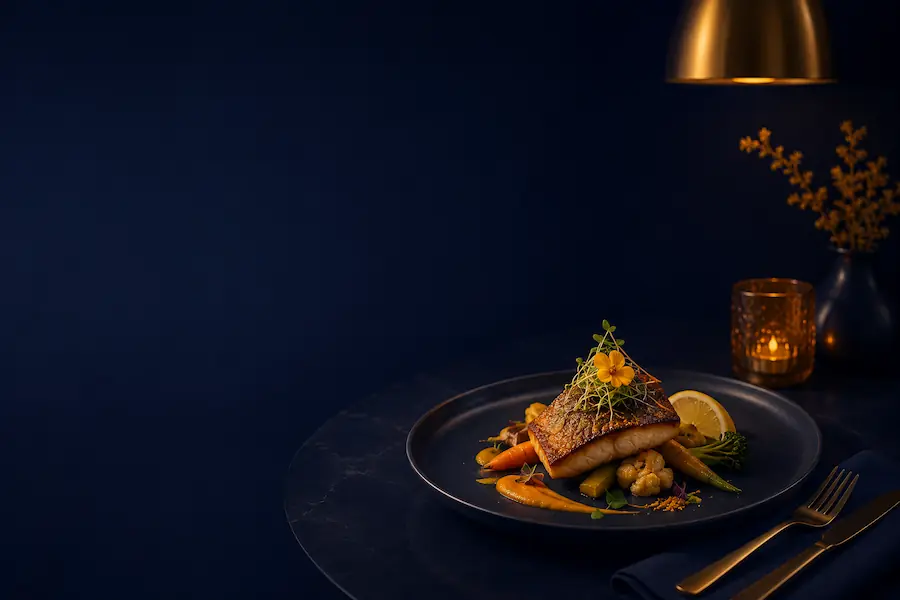
Mostly Google and the delivery apps, not Instagram. When someone nearby searches for food, or browses Maps, or opens a delivery app, your visibility in those moments decides whether they choose you. For a restaurant that means one thing above all: a complete, accurate, well-reviewed Google Business Profile, and, at multi-outlet scale, keeping every listing that way at once.
The metric most restaurants never look at is discovery searches, people who found you without searching your name. That number is driven almost entirely by getting your categories, attributes and photos right, and it is usually low simply because the listing is incomplete. Fixing it often does more than any campaign.
At multiple outlets the difficulty compounds. Duplicate listings fragment reviews, hours drift out of sync, and photos go stale. Managing that consistently across every location, plus responding to reviews at volume, is unglamorous operational work, and exactly where the visibility is won or lost.
A single duplicate or miscategorised listing can quietly exclude an outlet from searches it should always win. Across five outlets, those small errors multiply into a real revenue leak that nobody notices because the restaurant looks fine to its owner. We treat multi-outlet GBP as an operational system, because that is what it is.
The problems that actually matter here
GBP management across multiple outlets without listings drifting out of sync
Discovery searches versus direct searches, and moving the ratio
Review response at volume, which visibly affects rating trajectory
Delivery platform visibility running alongside, not against, your own channels
Location-specific campaigns that do not cannibalise each other
Our approach for hospitality brands
- 01
Consolidate and standardise
Audit and merge duplicate listings, then standardise categories, attributes, hours and photos across every outlet.
- 02
Grow discovery searches
The category and attribute work that gets you into searches you are currently excluded from.
- 03
Review response at scale
A workflow to respond across all outlets, because response visibly affects rating trajectory.
- 04
Geo-separated campaigns
Location-specific advertising that does not have your own outlets bidding against each other.
The path your customer actually takes
Every sector has its own decision pattern. Getting the channel mix right starts with knowing this one.
-
01
Decisions are immediate and local
A restaurant search resolves within the hour and within a few kilometres. "Restaurants near me", "best biryani in", "open now". There is almost no consideration cycle, which makes local visibility close to the entire game.
-
02
Photos and rating decide it
People choose on images and star rating before reading anything. Poor food photography is a direct revenue problem, and it is the single most common weakness we find.
-
03
Aggregators compete for the same customer
Zomato and Swiggy own a large share of discovery and take a meaningful cut. Direct channels (your Business Profile, your own ordering, WhatsApp) protect margin, and most restaurants under-invest in them because the aggregator volume feels easier.
-
04
Repeat visits are the actual business
Restaurants live on regulars. Acquisition matters, but the marketing that pays best is usually what brings the same customer back a fourth time.
What the economics really look like
Per-cover margin is thin, which makes paid acquisition hard to justify on a single visit and straightforward to justify on repeat behaviour. Aggregator commissions compound the problem. Volume that looks healthy can be close to margin-neutral once commission, discounting and packaging are counted. The most reliable returns in this category come from free and owned channels: Google Business Profile, direct ordering, and a WhatsApp list of regulars. Model a customer over several visits rather than one, or paid channels will always look unaffordable.
Ranges here are indicative and category-dependent. We model yours from your actual figures before setting any target.Services we run for hospitality brands
The first ninety days
In this order, because each phase depends on what the previous one established.
Weeks 1–3: Profile, photography and hours
Google Business Profile completed properly, with real photographs of food and interior, accurate hours including holidays, and the menu attached. This is the highest-return work available and it costs almost nothing.
Weeks 3–8: Review engine and direct ordering
A systematic way to collect reviews at the table or after delivery, and a direct ordering route that saves commission on your existing regulars.
Weeks 8–12: Local paid and retention
Tightly geo-fenced paid campaigns around meal times, plus a WhatsApp or SMS list used sparingly for genuine reasons.
What goes wrong in hospitality
The same handful of errors, across almost every account we inherit in this sector.
- Depending entirely on aggregators, where commission and enforced discounting compress already thin margins
- Using stock or heavily edited food photography that does not match what arrives at the table
- Wrong or outdated opening hours on the Business Profile, which produces a bad first experience and a bad review
- Chasing new customers while doing nothing to bring existing regulars back
Restaurant Marketing: common questions
-
For most restaurants yes, for reach, but treat them as a channel rather than the business. Build direct ordering alongside so your regulars, who are your best customers, are not costing you commission on every order.
-
Ask systematically at the point of satisfaction: a table card with a QR code, or a message after delivery. Recency and reply rate matter as much as volume, and a steady trickle looks more credible than a sudden burst.
-
Only tightly targeted and usually only around meal times and a small radius. The higher-return work is almost always Business Profile, photography and reviews, which cost time rather than media budget.
-
They can work for launches and for visually distinctive food. Judge them on covers and bookings rather than reach, and expect most of the value in the first fortnight rather than as an ongoing channel.
Grow your hospitality brand
Tell us where you are now. We will reply on WhatsApp with a first read on what we would do.