





Key Takeaways:
-
Granularity is Key: Understanding performance at the SKU level, not just the campaign level, is essential for profitability.
-
The Power of Automation: Manual tracking in spreadsheets is inefficient. Dedicated tools automate data aggregation and provide actionable insights.
-
ROAS is the North Star: The ultimate goal of product performance monitoring is to identify which products deliver the highest Return on Ad Spend.
-
Integration is Non-Negotiable: Your tool must seamlessly connect your eCommerce platform (Shopify, WooCommerce) with your ad platforms (Meta, Google).
For any eCommerce brand running ads, a critical question often goes unanswered: “Which specific products are actually driving my profitability?” Seeing a 4:1 ROAS on a campaign is good. Knowing that the “Premium Wireless Headphones” drove a 8:1 ROAS while the “Budget Earbuds” lost money is game-changing.
This is product performance monitoring. It’s the process of tracking metrics like revenue, ROAS, and conversion rate at the individual product or SKU level within your advertising campaigns.
The Gold Standard: Dedicated Analytics & Attribution Platforms
These platforms are built specifically to provide a unified view of marketing performance across channels.
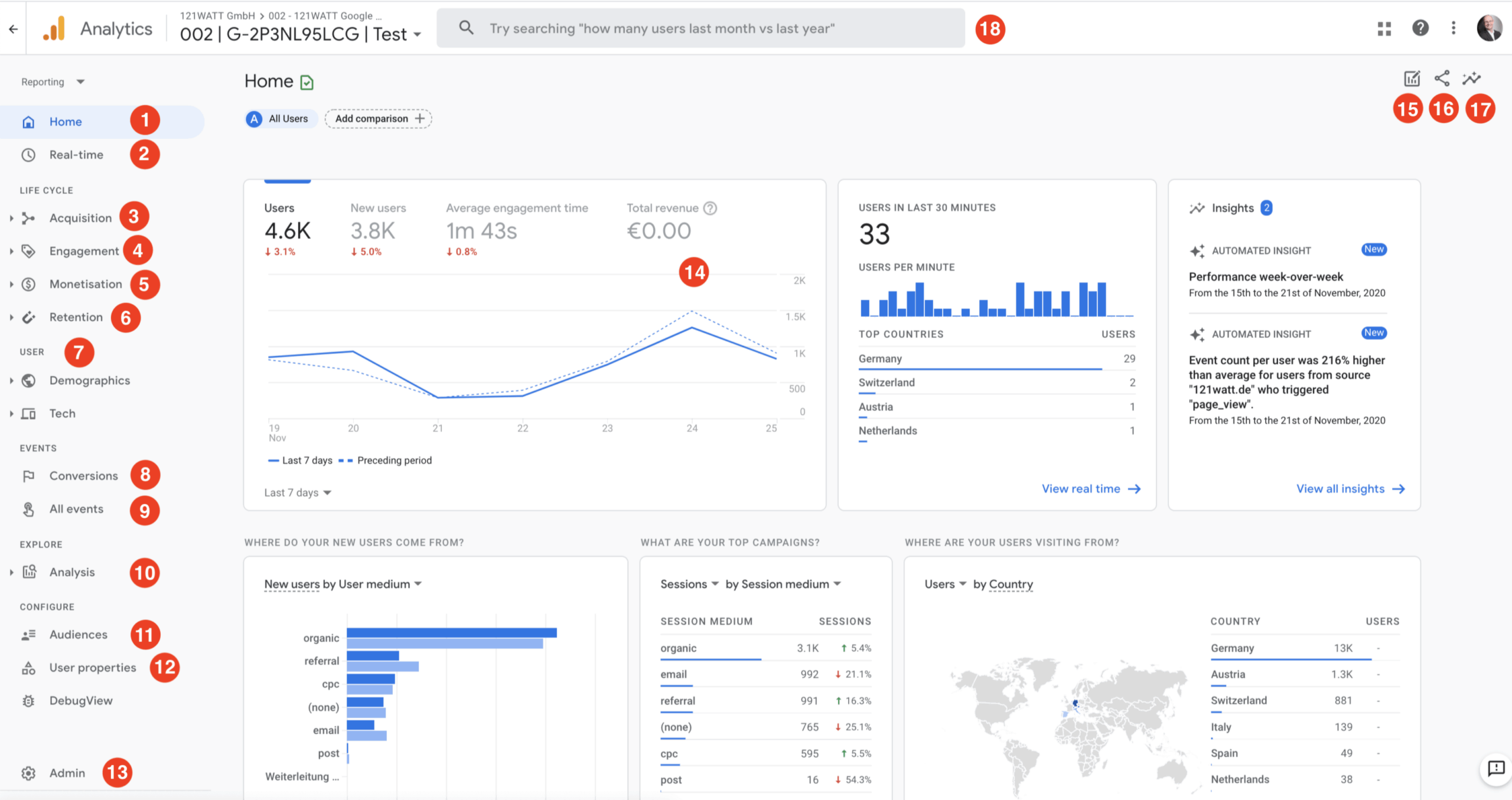
1. Google Analytics 4 (GA4)
-
Best For: Free, deep-dive analysis of user behavior and acquisition channels.
-
Key Features: While not a dedicated PPC tool, GA4’s Explorations and Advertising Snapshot reports are powerful. You can segment conversions and revenue by product ID or name, and see which channels/campaigns drive sales for specific items.
-
Pros: Free, deeply integrated with Google Ads, provides a holistic view of the customer journey.
-
Cons: Steep learning curve, data sampling on large websites, attribution models can be complex.
-
Verdict: A mandatory free starting point for every brand.
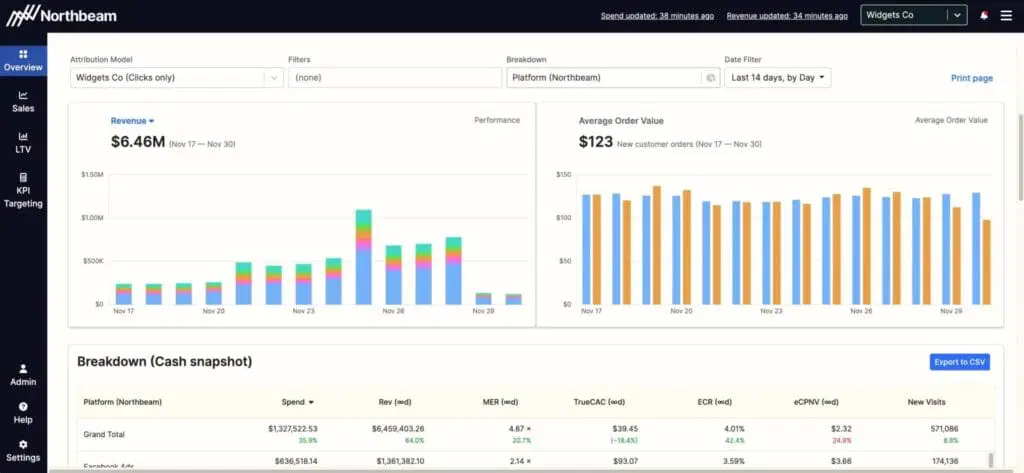
2. Northbeam
-
Best For: Mid-to-enterprise level brands needing sophisticated multi-touch attribution.
-
Key Features: Northbeam uses machine learning to track customer journeys across ads, social, email, and organic. Its strength lies in showing how different touchpoints contribute to the sale of specific products.
-
Pros: Excellent visualizations, accurate cross-channel attribution, helps justify marketing spend.
-
Cons: Premium pricing, can be complex for smaller brands.
-
Verdict: The ultimate tool for brands that need to understand the full-funnel impact of their ads on product sales.
The Specialists: eCommerce & PPC Profitability Tools
These tools focus squarely on connecting ad spend to product-level profitability.
3. TripleWhale
-
Best For: Shopify-plus brands focused on Meta and Google Ads.
-
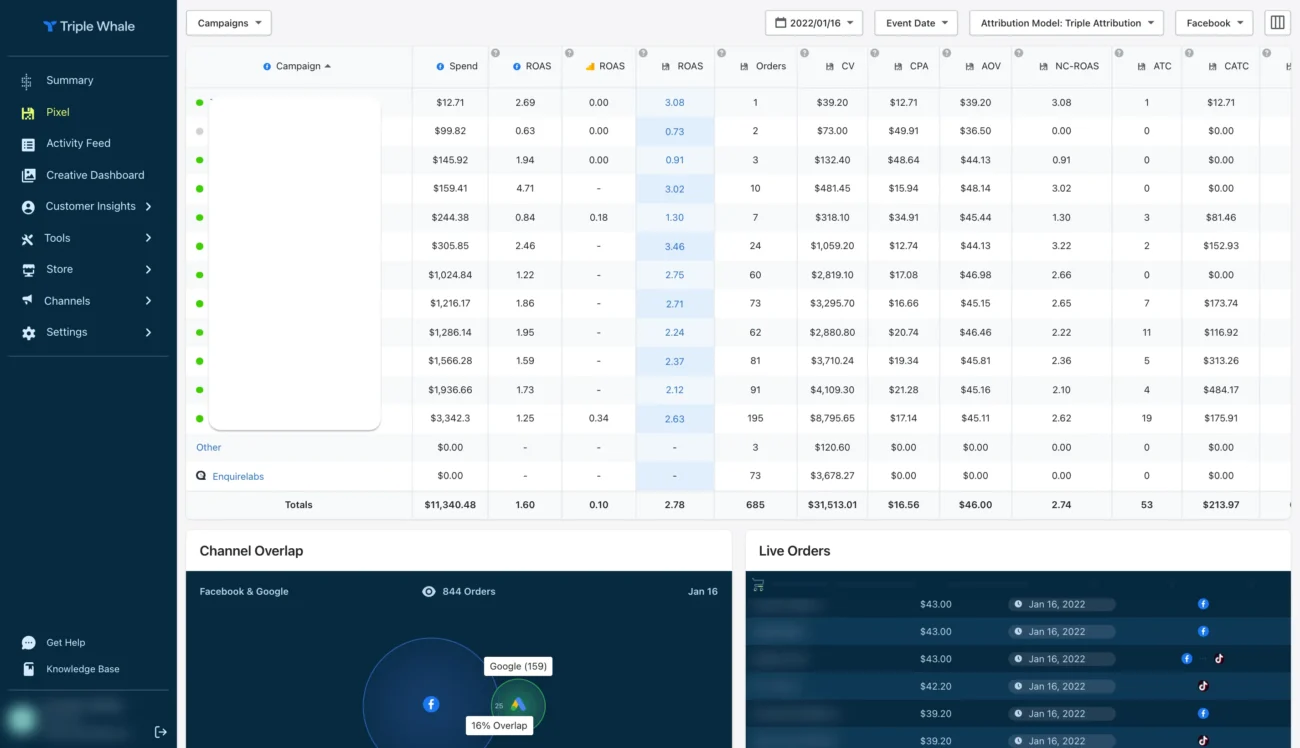
Key Features: TripleWhale aggregates data from your store, ad platforms, and fulfillment costs to show true profit per product. Its Creative Cockpit feature also ties creative performance back to product sales.
-
Pros: Incredibly user-friendly interface, focuses on profit (not just revenue), excellent for creative analysis.
-
Cons: Primarily built for Shopify, pricing is geared towards serious advertisers.
-
Verdict: A fan favorite for D2C brands that have moved beyond basic ROAS tracking.
4. Measured
-
Best For: Large enterprises requiring rigorous incrementality testing.
-
Key Features: Measured goes beyond attribution to answer a core question: “Would this product have sold even without the ad?” Using holdout groups, it measures the true incremental lift of your campaigns for specific products.
-
Pros: Provides the most accurate picture of ad effectiveness, prevents wasted spend on products that would sell organically.
-
Cons: High cost and complexity, overkill for most SMBs.
-
Verdict: The scientific approach for brands with seven-figure+ ad budgets.
The Native Platform Solutions
Your ad platforms have built-in tools that are often underutilized.
5. Meta’s Conversions API (CAPI) & Aggregated Event Measurement (AEM)
-
Best For: All brands running Meta Ads.
-
Key Features: While not a “tool” in the traditional sense, properly implementing CAPI is crucial for accurate product performance data. It ensures that purchase events (including product IDs and values) are reliably sent from your server to Meta, bypassing browser restrictions. This allows Meta’s algorithm to optimize effectively.
-
Verdict: The foundational layer for accurate product monitoring on Facebook and Instagram.
6. Google Ads & Google Shopping
-
Best For: All brands running Google Ads.
-
Key Features: Within your Google Ads account, the Product Segments report (under Campaigns > Shopping) is your best friend. It breaks down performance by individual item ID. You can see clicks, cost, conversions, and ROAS for each product in your Merchant Center feed.
-
Verdict: Native, essential, and free for Google Ads users.
The Connector: Product Feed Management Tools
Performance monitoring starts with a high-quality data feed.
7. DataFeedWatch
-
Best For: Brands with large catalogs selling on multiple channels (Google, Facebook, Pinterest, etc.).
-
Key Features: This tool helps you optimize your product feed by customizing titles, descriptions, and images for each channel. A better-optimized feed leads to better ad performance, which in turn provides cleaner data for monitoring.
-
Verdict: A prerequisite tool for ensuring your products are set up for success before the first click even happens.
How to Choose the Right Tool: A Simple Framework
Your choice depends on your brand’s stage:
-
Stage 1: Startup (< ₹50k/month ad spend)
-
Tools: Google Analytics 4 (free) + Native Platform Reports.
-
Focus: Get the fundamentals right. Ensure your tracking pixels and product parameters are correctly implemented.
-
-
Stage 2: Scaling (₹50k – ₹5 Lakh/month ad spend)
-
Tools: TripleWhale or a similar mid-tier platform.
-
Focus: Move from revenue-based ROAS to profit-based decisions. Start A/B testing product-specific ad creatives.
-
-
Stage 3: Enterprise (> ₹5 Lakh/month ad spend)
-
Tools: Northbeam or Measured.
-
Focus: Sophisticated multi-touch attribution, incrementality testing, and forecasting.
-
Conclusion: From Data to Dominance
Product performance monitoring transforms your advertising from a guessing game into a precise science. By investing in the right tools, you can make data-driven decisions to:
-
Pause ads on low-performing products.
-
Increase budgets for your hidden gems.
-
Bundle products strategically.
-
Inform your inventory forecasting.
In today’s competitive landscape, knowing your numbers at the SKU level isn’t an advantage—it’s a necessity.